
Table of Contents
Evaluating UV-Stable Polyaspartic Topcoats for Western Canada
When evaluating a UV-stable polyaspartic topcoat for Western Canada, the key criteria are UV resistance, cure speed, and surface preparation, each directly impacting outdoor coating durability. At Epo-Tech, we have seen how polyaspartic coatings prevent the chalky discoloration that standard epoxy develops under direct sun. These coatings cure to foot traffic in as little as 1 to 2 hours, cutting installation downtime considerably, and our experience confirms that diamond grinding is non-negotiable for long-term adhesion. Our hybrid systems, which combine epoxy and polyurethane chemistry, offer additional flexibility to handle Alberta’s temperature swings. Abrasion resistance varies among formulations, so choosing the right product for the exposure level is essential. Understanding these performance considerations informs the UV protection approach needed for outdoor epoxy projects.
Key Takeaways
- Outdoor epoxy installations are exposed to UV rays for prolonged periods, which indoor installations rarely encounter.
- When applied under the Alberta sun, standard epoxy coatings are prone to rapid UV degradation, making UV resistance a critical consideration.
- Standard epoxy coatings are susceptible to yellowing when exposed to UV light.
- Polyaspartic topcoats keep pool decks protected by providing UV stability, preventing yellowing from the sun, and providing abrasion resistance for pool deck traffic and outdoor weather.
- In residential garages, common epoxy coatings use amine-based hardeners that are sensitive to ultraviolet (UV) light.
1. UV Protection for Outdoor Epoxy Projects
Outdoor epoxy installations are exposed to UV rays for prolonged periods, which indoor installations rarely encounter.
Standard epoxy coatings are exceptionally durable in controlled environments. However, they are inherently vulnerable to UV degradation. This vulnerability occurs when they are subjected to direct sunlight over extended periods.
Prior exposure to UV rays causes visible consequences that manifest as chalking, where the surface develops a powdery residue, and yellowing, which progressively discolors the finish and compromises its aesthetic appeal.
Hybrid systems that use a durable epoxy as a base and a UV-stable polyaspartic as a topcoat effectively prevent chalking while maintaining the structural integrity that makes epoxy desirable for high-traffic applications.
Also, polyaspartic coatings are faster curing than epoxy, meaning they reach foot traffic in 1 to 2 hours.
Abrasion resistance can vary between product formulations.
Also, use of diamond tooling and diamond grinding to create a profile is essential for the adhesion of a topcoat to be effective for long-term durability.
This is also true when considering UV intensity, as found in Alberta, for long-term floor performance.
2. Polyaspartic vs Epoxy Under Alberta Sun
When applied under the Alberta sun, standard epoxy coatings are prone to rapid UV degradation, making UV resistance a critical consideration. Our internal comparison shows that polyaspartic and hybrid epoxy-polyurethane systems deliver superior performance in this climate.
Unlike standard epoxy, which yellows and chalks, polyaspartic coatings with UV resistance stay colour-fast. These hybrid systems cure to foot traffic in 1–2 hours and fully harden within 24 hours, compared to 24–48 hours for standard epoxy. They also offer two to three times the abrasion resistance of standard epoxy, resisting road salt and vehicle traffic. Regardless of coating choice, professional diamond grinding is essential; skipping it compromises adhesion and leads to peeling.
For a flooring solution built to endure Alberta’s conditions, we encourage you to get a quote tailored to your project. Choosing a UV-stable polyaspartic topcoat is a proactive step that helps prevent yellowing and preserves your floor’s appearance over the long term.
3. Prevent Yellowing with Aliphatic Coatings
Standard epoxy coatings are susceptible to yellowing when exposed to UV light. This can diminish the aesthetics of garage and commercial flooring. A UV-stable aliphatic polyaspartic coating preserves color clarity and gloss while delivering long-term performance.
Unlike standard epoxy, which relies on aromatic chemistry prone to degradation under sunlight, aliphatic formulations resist UV breakdown at the molecular level. This makes them an ideal choice for floors in Alberta and Kelowna, where intense summer sun and exposure accelerate yellowing in conventional finishes. Our hybrid systems combine a 100% solids epoxy base with a high-performance UV-stable topcoat, offering the adhesion strength of epoxy while preventing discoloration.
We recommend our hybrid system for garages and commercial floors exposed to sunlight, where a non-yellowing concrete sealer is essential to preserve the floor’s clean, professional look. For pool decks, UV-stable coatings are beneficial to maintain the look of the deck and enhance the safety of the deck.
4. Pool Deck Benefits of Polyaspartic Topcoats
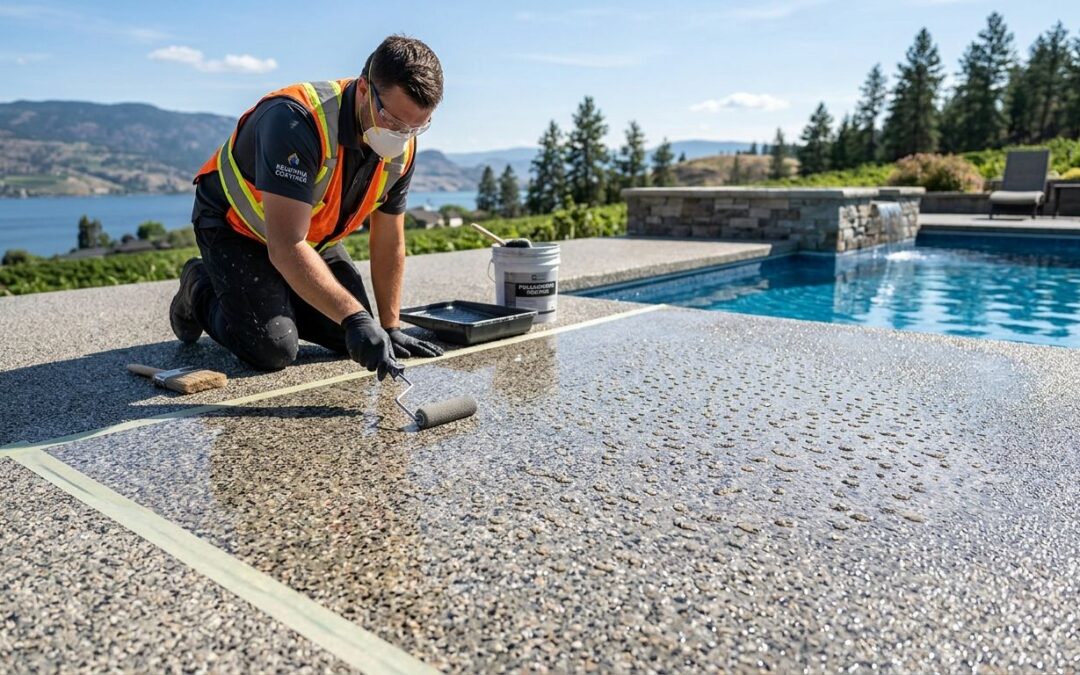
Polyaspartic topcoats keep pool decks protected by providing UV stability, preventing yellowing from the sun, and providing abrasion resistance for pool deck traffic and outdoor weather.
- UV-stable polyaspartic finishes prevent yellowing and chalking after prolonged sun exposure, maintaining a like-new appearance on pool decks in Alberta.
- Rapid cure allows foot traffic within one to two hours, enabling one-day installation so pool areas are back in use quickly.
- Epo-Tech reports that these topcoats provide two to three times the abrasion resistance of standard epoxy, protecting surfaces from furniture and frequent use.
- Chemical resistance against chlorine and pool chemicals prevents staining and degradation, ensuring long-term durability.
- Proper surface preparation is essential for strong adhesion in moist outdoor settings; we emphasize diamond grinding to create a reliable mechanical bond that prevents delamination.
Pool decks aren’t the only surface that benefits from the UV stability and abrasion resistance of polyaspartic topcoats. Garage floors that have door openings and are exposed to the sun also benefit from a polyaspartic topcoat.
5. UV Stability for Residential Garage Floors
In residential garages, common epoxy coatings use amine-based hardeners that are sensitive to ultraviolet (UV) light. When a cured epoxy floor is exposed to sunlight, UV radiation initiates a photochemical reaction that starts the breakdown of the epoxy matrix. This breaking down of the epoxy matrix causes the surface to chalk and discolor to an amber hue. This process can begin a few weeks after the floor is installed.
In our hybrid systems, we use UV-stable polyaspartic topcoats, which resist this degradation. Unlike conventional epoxies, these coatings use aliphatic chemistries that remain colourfast under prolonged sun exposure, maintaining a clear, glossy finish for years. Because of this, Epo-Tech uses these hybrid systems for residential garage floors, which are subjected to UV radiation daily.
UV resistance of a coating is important for a coating’s longevity, but the quality of the preparation of the substrate is more critical for the longevity of the coating. We diamond grind the surface to create a rough profile, to bond the top coating to the concrete, and prevent delamination. The UV stability of polyaspartic is also complemented by its fast-curing nature which allows homeowners to quickly reclaim their garage floor.
6. Rapid Curing and One-Day Installation
Rapid curing is a defining feature of polyaspartic coatings, enabling a one-day installation for garage floors. Standard epoxy coatings can require days of curing before they can bear weight; by contrast, our hybrid polyurethane topcoat systems reach foot-traffic readiness within one to two hours.
The topcoat cures fully for heavier use, including vehicle traffic, by the next morning, eliminating the need for extended garage closure.
Achieving that rapid timeline depends on proper surface preparation. Diamond grinding, rather than acid etching, creates a reliable mechanical bond that ensures the coating adheres smoothly without risk of delamination. We thoroughly profile the concrete with diamond grinders to open pore structure, then vacuum the surface to remove all dust, leaving a pristine substrate for the primer.
This fast process minimizes disruption for homeowners in Edmonton and Kelowna, who can resume using their garage the same day the work is done.
In addition to quick installation, these coatings provide excellent chemical and abrasion resistance, making them ideal for demanding commercial environments.
7. Chemical and Abrasion Resistance for Commercial Use
For commercial spaces where cleaning agents, automotive fluids, and heavy foot traffic are daily realities, polyaspartic coatings deliver a level of protection that standard epoxy cannot match. Our UV-stable polyaspartic topcoat prevents the yellowing and chalking that sunlight causes in ordinary epoxy, keeping showrooms and entryways looking new. This same system offers up to three times the abrasion resistance of conventional coatings, so high-traffic corridors, loading docks, and warehouse aisles remain free of scuffs and dulling. To achieve that resilience, we rely on diamond grinding to create a clean, textured concrete surface that forms a mechanical bond with the coating. This preparation is essential: without it, a floor cannot fully repel oil, gasoline, road salts, and de-icing chemicals that would otherwise break down the film. These protective qualities directly reduce maintenance and repair expenses over the floor’s lifespan, making polyaspartic a cost-effective investment for commercial operations.
8. Cost-Effective Investment in Floor Longevity
A commercial floor’s long-term value depends on resisting wear and avoiding the cost of frequent recoating. A UV-stable polyaspartic topcoat delivers this through high durability and fast installation. Hybrid polyaspartic topcoats offer up to three times the abrasion resistance of standard epoxy—extending service life and lowering lifecycle costs. UV stability prevents yellowing and chalking from sunlight, preserving protective integrity. Rapid curing allows foot traffic in one to two hours, enabling complete installation and return to service in a single day. Diamond grinding creates a strong mechanical bond that prevents delamination, a leading cause of premature floor failure. With faster turnaround, businesses avoid extended closures. For commercial facilities in Edmonton and across Alberta, our polyaspartic topcoat solution delivers enduring performance that withstands heavy traffic, chemicals, and freeze-thaw cycles—a cost-effective approach to protecting the floor investment. This strategic upgrade reduces long-term floor costs.
Frequently Asked Questions
Why is a UV stable topcoat necessary for outdoor epoxy projects?
Standard epoxy coatings are vulnerable to UV degradation, which causes chalking and yellowing under direct sunlight. A UV-stable topcoat, such as a polyaspartic coating, is necessary because it blocks UV rays and prevents this damage, preserving the floor’s appearance and structural integrity.
How does polyaspartic compare to epoxy for sun exposure?
Polyaspartic coatings are significantly more UV-stable than standard epoxy, resisting yellowing and chalking to stay colour-fast. They cure to foot traffic in 1-2 hours, offer two to three times the abrasion resistance, and maintain their clarity under intense Alberta sun.
Can a polyaspartic topcoat prevent epoxy from yellowing?
Yes, a polyaspartic topcoat can prevent epoxy from yellowing. Its aliphatic chemistry resists UV breakdown at the molecular level, forming a protective barrier that stops UV rays from reaching the epoxy base and preserving colour clarity.
What are the advantages of using polyaspartic on pool decks?
Polyaspartic topcoats on pool decks provide UV stability to prevent yellowing, rapid curing for one-day installation, and two to three times the abrasion resistance of standard epoxy. They also resist chlorine chemicals, and slip-resistant finishes enhance safety in wet areas.
Is a UV stable coating required for residential garage floors?
Yes, a UV stable coating is required for residential garage floors. Common epoxy coatings with amine-based hardeners are sensitive to UV light, leading to amber discoloration and chalking. A UV-stable polyaspartic topcoat prevents this degradation, maintaining a clear, glossy finish despite daily sun exposure.
Your UV-Stable Polyaspartic Solution from Epo-Tech
The long-term value of a durable garage floor makes polyaspartic the smart choice, and Our UV-stable coating delivers performance that justifies the investment. Our hybrid polyaspartic systems cure fast enough for one-day installation, reaching foot-traffic stage in just 1–2 hours so your garage returns to service with minimal disruption. The UV-stable topcoat resists yellowing under sunlight, and its superior abrasion resistance guards against daily wear, chemical spills, and road salts, extending the floor’s service life significantly. We rely on diamond grinding to create a mechanical bond that ensures reliable adhesion, a critical step that reduces the risk of delamination and adds years to your floor’s performance. For a durable, UV-stable polyaspartic topcoat backed by expert installation, contact Epo-Tech for a custom quote.
Request Your Polyaspartic Flooring Quote
Now that you’ve compared the best UV-stable polyaspartic topcoats of 2026, you know how they prevent yellowing and chalking under intense sunlight. Whether for a pool deck, driveway, or garage floor, a professional polyaspartic application with expert surface preparation ensures lasting durability. The fast cure and one-day installation mean minimal downtime and quick return to use. Epo-Tech’s residential epoxy services cover all these surfaces, using high-quality materials and precise preparation. Contact us at (778) 594-3595 to get a custom quote for your project. Our team serves clients throughout Western Canada, including Edmonton and Kelowna, BC. Start your journey toward a UV-resistant, low-maintenance floor today.