
Table of Contents
- What Is Better Than Epoxy for Concrete?
- Epo-Tech's Concrete Coating Expertise
- Comparing Polyaspartic, Polyurea, Polished Concrete, and Epoxy
- Evaluating Long-Term Value of Concrete Coatings
- Choosing the Right Coating for Your Floor
- Request Your Custom Quote from Epo-Tech
What Is Better Than Epoxy for Concrete?
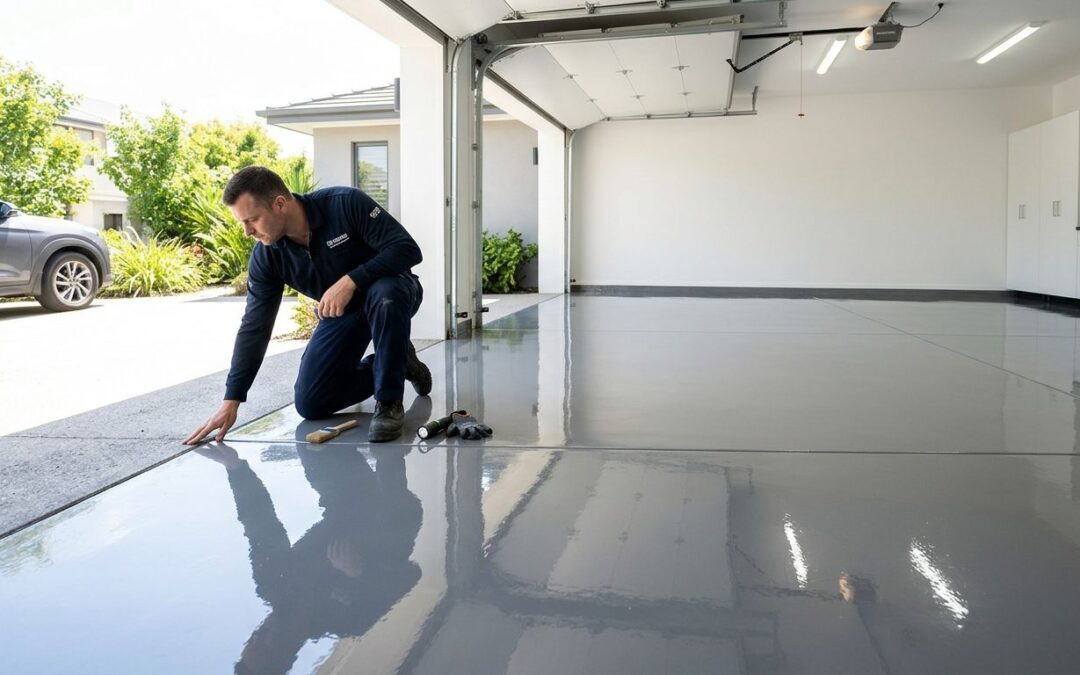
Wondering what is better than epoxy for concrete floors? For Alberta homeowners and businesses, hybrid epoxy-polyurethane systems outperform standard epoxy by combining a 100% solid epoxy base with a durable polyurethane topcoat. These coatings resist UV damage, cure within one to two hours for same-day use, and flex to withstand Alberta’s freeze-thaw cycles without cracking. They also deliver a 12- to 18-year service life and resist oil, gasoline, road salts, and de-icing chemicals common on garage floors.
Another option would be polished concrete, where a diamond polish and a liquid hardener transform the previously porous concrete floor into a dense, high-gloss finish that never has to be recoated, waxed, or stripped. This process is odorless, water based, and nonflammable.
Our team is ready to design and install the decorative concrete surface that is right for you.
Key Takeaways
- We’re experts on high performance concrete coatings for Western Canada, using diamond ground surface preparations together with 100% solid epoxy bases coated with UV stable polyaspartic coats.
- Many homeowners wonder what is better than epoxy for concrete when choosing a durable floor coating.
- When weighing a new concrete floor coating, the upfront price is only part of the story.
- Your choice in a surface covering will be based largely upon where it’s located and how often it needs to be cared for.
- Choosing which coating should be selected is easier with proper expert guidance.
Epo-Tech’s Concrete Coating Expertise
We’re experts on high performance concrete coatings for Western Canada, using diamond ground surface preparations together with 100% solid epoxy bases coated with UV stable polyaspartic coats. This creates a floor more enduring than typical single-layer epoxy floor in Alberta’s weather conditions.
Firstly our epoxy-polyaspartic hybrids are ready for foot traffic between only one-two hours which means we can complete all installations on a given job site over just one day whereas the old school method of using epoxy takes anywhere from 24 – 48 hours. Secondly the aliphatic chemistry used for the topcoat on our polyaspartics resists yellowing and chalking under Alberta’s intense sun. Additionally this same chemical makes the system flexible enough to withstand the freezing/ thawing cycle without cracking. Finally, polyaspartics hold up against oils, gasolines, road salt and other harsh chemicals commonly found in any garage setting. With the polyaspartic vs epoxy choice you win when selecting your Edmonton or Kelowna garage flooring
If properly installed, our high-tier systems typically deliver 12 to 18 years of service before major wear appears. With diamond grinding creating a mechanical bond that ensures long-term adhesion and durability, homeowners and businesses in Edmonton and Kelowna get floors that stay beautiful and functional through every season. Polyaspartic vs Epoxy Garage Floor in Alberta is thus a great idea as this will save your time and improve its functionality.
Ready to upgrade your concrete? request an estimate today.
Comparing Polyaspartic, Polyurea, Polished Concrete, and Epoxy
Many homeowners wonder what is better than epoxy for concrete when choosing a durable floor coating. We break down the key differences between polyaspartic, hybrid epoxy-polyaspartic, polished concrete, densifiers & sealers, and standard epoxy to help you decide which option suits your project in Alberta.
| Feature | Polyaspartic | Hybrid Epoxy-Polyaspartic | Polished Concrete | Densifiers & Sealers | Standard Epoxy |
|---|---|---|---|---|---|
| UV stability and yellowing resistance | Excellent resistance to UV breakdown and yellowing | Excellent resistance due to polyaspartic topcoat | Naturally resistant; no yellowing issues | Moderate; varies by sealer type | Poor; prone to chalking and amber discoloration |
| Foot traffic cure time | Ready in 1–2 hours | Ready in 1–2 hours | Immediate | Immediate | 12–24 hours |
| Abrasion resistance | Two to three times greater than standard epoxy | Two to three times greater than standard epoxy | High due to densified surface | Low to moderate | Low to moderate |
| Hot tire pick-up resistance | Excellent | Excellent | Not applicable | Moderate | Poor |
| Suitability for Alberta freeze-thaw cycles | Excellent | Excellent | Excellent | Good | Moderate |
| Maintenance demands | Minimal; periodic cleaning | Minimal; periodic cleaning | Minimal; occasional polishing | Moderate; resealing every 2–5 years | Moderate; waxing and resealing every 1–3 years |
| Best application | Garage floors, outdoor surfaces, commercial spaces | Sun-exposed garages, driveways, pool decks | Commercial interiors, showrooms, high-traffic areas | Light-duty floors, basements | DIY-friendly projects, budget-conscious applications |
polyaspartic and hybrid polyaspartic-epoxy have much better UV stabilization, as well as quicker cure rate than ordinary epoxy, which makes them ideal options for Alberta’s sunny days and freeze/thaw weather situations. polished concrete has a hard smooth appearance, doesn’t need painting and upkeep and doesn’t call for re-coating. However, the chemical resistance that will be required when installing garage floors won’t be present, unlike with polyaspartic flooring.
Evaluating Long-Term Value of Concrete Coatings
When weighing a new concrete floor coating, the upfront price is only part of the story. Homeowners in Edmonton and across Alberta see greater value in systems that deliver years of flawless service without frequent touch-ups or early failures. We recommend focusing on how long a coating lasts, how well it resists the daily wear of a garage, and how quickly it returns to full use after installation.
If properly installed, these higher-end hybrid products – which combine a 100%-solid epoxy base with a topcoat made from more durable polyurethane – tend to last between 12 and 18 years. These compounds will be less vulnerable to yellowing or chalking as the result of UV exposure, thereby keeping floors looking fresher for far longer. They will also flex with Alberta’s freeze-thaw cycles, reducing the risk of cracking from temperature swings. And they resist oil, gasoline, road salts, and de-icing chemicals, keeping the surface looking and performing like new even under heavy garage traffic. This means that surfaces remain protected, attractive and functional despite regular contact by vehicles in garages.
In addition to all of this, polyaspartic-based systems allow foot traffic in as little as 3-4 hrs and vehicle traffic in about 24 hrs. However, when you balance those durability factors against the initial investment, the choice becomes clear: prioritize total years of service rather than price per square foot alone.
Choosing the Right Coating for Your Floor
Your choice in a surface covering will be based largely upon where it’s located and how often it needs to be cared for. Because the climate changes from season to season, your garage door or any other surface exposed to sunlight should have protection against the sun’s harmful rays, yet still maintain glossiness and a long-lasting finish.
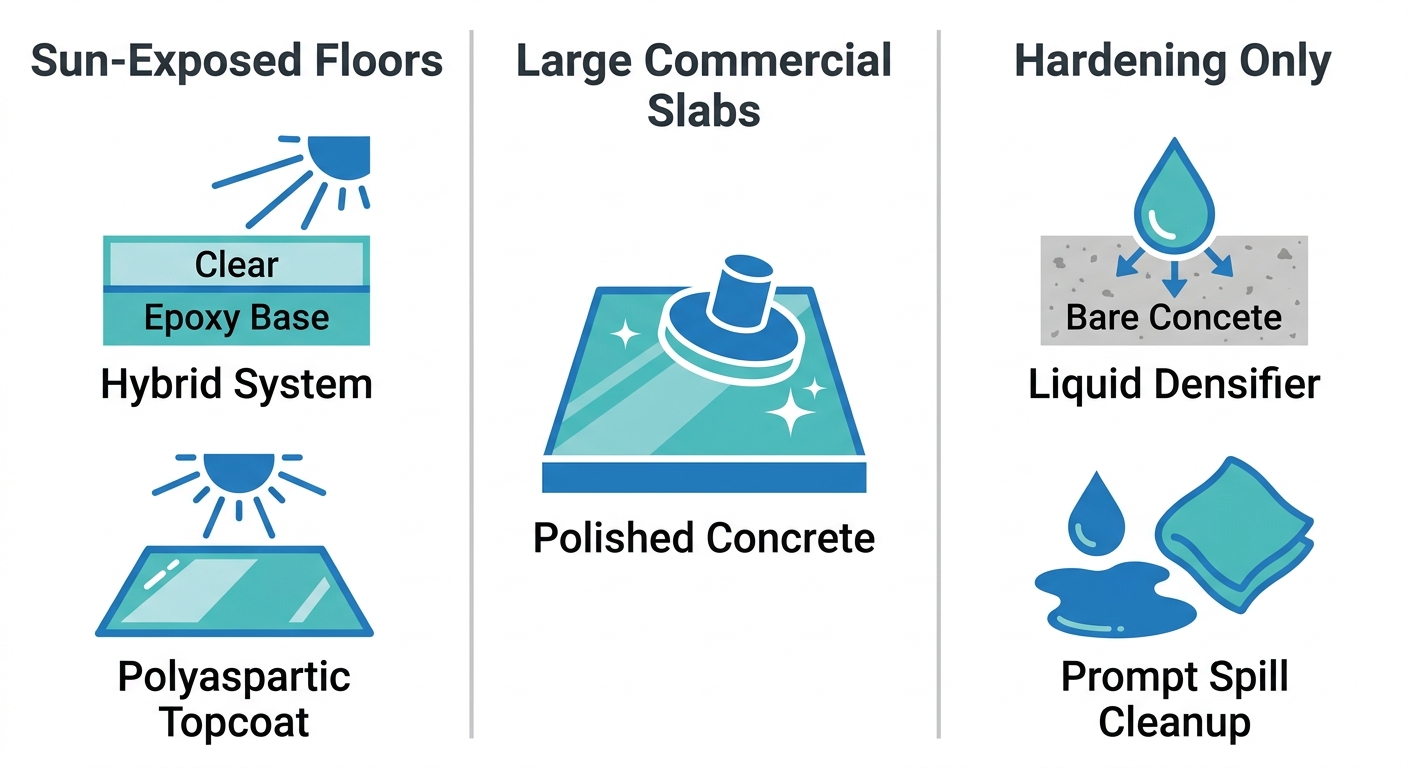
When it comes to garages or floors in direct sunlight, polyaspartic coatings far exceed epoxy when subjected to intense UV light due to their aliphatic chemistry. The hybrid coating uses an epoxy as the base coat which provides structure and is topped with a polyaspartic topcoat that provides UV protection. This allows these products to set up in as little as one-to-two hours versus 24-48 hours of curing time required from most epoxies. Before applying the polyaspartic coating, ensure the correct surface preparation including diamond grinding to obtain proper mechanical adhesion to increase the life span of the flooring.
If you prefer a coating-free solution, polished concrete transforms porous slabs into dense, high-gloss floors that require no re-coating, waxing, or stripping. This method, endorsed by industry associations, delivers a durable finish with minimal maintenance, making it ideal for both restoration and new construction. Alternatively, liquid densifiers permanently harden the concrete by reacting with hydrated cement, eliminating dusting without forming a protective film. While densifiers reduce porosity, spills should be cleaned promptly or sealed to prevent staining.
The decision depends upon the state of the floor as well as what you want most from it. Have the surface of your floor evaluated in order that you can decide whether a UV-stable hybrid will be preferable over a finished slab, or even if just a densified slab would suffice.
Frequently Asked Questions
Does hot tire pick-up affect epoxy and polyaspartic coatings differently?
Polyaspartic coatings show excellent resistance to hot tire pick-up, while standard epoxy has poor resistance. Polyaspartic systems maintain surface integrity under vehicle traffic, unlike epoxy which can soften or stain.
Why is polyaspartic often considered better than epoxy for concrete floors?
Polyaspartic coatings resist UV breakdown, yellowing, and chalking far better than epoxy. They also cure in one to two hours for immediate use and flex to withstand freeze-thaw cycles without cracking.
What are the main advantages of using polyurea over epoxy for concrete coatings?
Polyurea coatings provide two to three times greater abrasion resistance than standard epoxy. They also cure rapidly and resist chemicals, making them suitable for high-traffic and industrial environments.
Is polished concrete a more durable and cost-effective alternative to epoxy?
Polished concrete creates a dense, high-gloss finish without recoating, waxing, or stripping. It requires minimal maintenance and lasts long but lacks the chemical resistance needed for garage floors compared to coatings.
When should I choose concrete sealers instead of an epoxy coating?
Concrete sealers are best for light-duty floors or basements where minimal protection is needed. They reduce dusting but do not provide the abrasion or chemical resistance of epoxy or polyaspartic systems.
Request Your Custom Quote from Epo-Tech
Choosing which coating should be selected is easier with proper expert guidance. Hybrid epoxy-polyurethane systems have UV-stable, flexible formulations that can deliver a service life of 12 to 18 years when properly installed, making them a smart investment for many homeowners in Edmonton and Kelowna.
Still wondering what is better than epoxy for concrete floors? Our team serves both cities through dedicated divisions, ready to assess your garage or concrete floor and recommend the ideal system for your space.
Let’s help you choose the right flooring solution for your needs. Get in touch now to request a custom quote from us and see how our performance coatings can improve the look of your property.
Get Your Custom Coating Quote
You’ve now compared polyaspartic, hybrid epoxy-polyaspartic, polished concrete, densifiers, and standard epoxy side by side. The right choice comes down to your floor’s sun exposure, traffic, and the maintenance level you’re comfortable with. Hybrid systems pairing a 100% solid epoxy base with a UV-stable topcoat can deliver 12 to 18 years of service life when properly installed, along with resistance to road salts and de-icing chemicals. Surface preparation, such as diamond grinding for a mechanical bond, makes the difference between a floor that lasts and one that fails early. Epo-Tech serves homeowners and businesses in Edmonton and Kelowna, with divisions in both cities. Call (778) 594-3595 to have your floor assessed and receive a custom quote. Our team is ready to design and install the decorative concrete surface that is right for you.