
Table of Contents
- The Five-Year Mark: What Your Epoxy Floor Reveals
- What Epoxy Floors Look Like After 5 Years
- Why Epoxy Floors Are Built to Last
- How Epoxy Floors Age: Gloss, Yellowing, and Fading
- Keeping Your Epoxy Floor Looking Its Best
- Invest in a Floor That Still Looks Great in Five Years
The Five-Year Mark: What Your Epoxy Floor Reveals
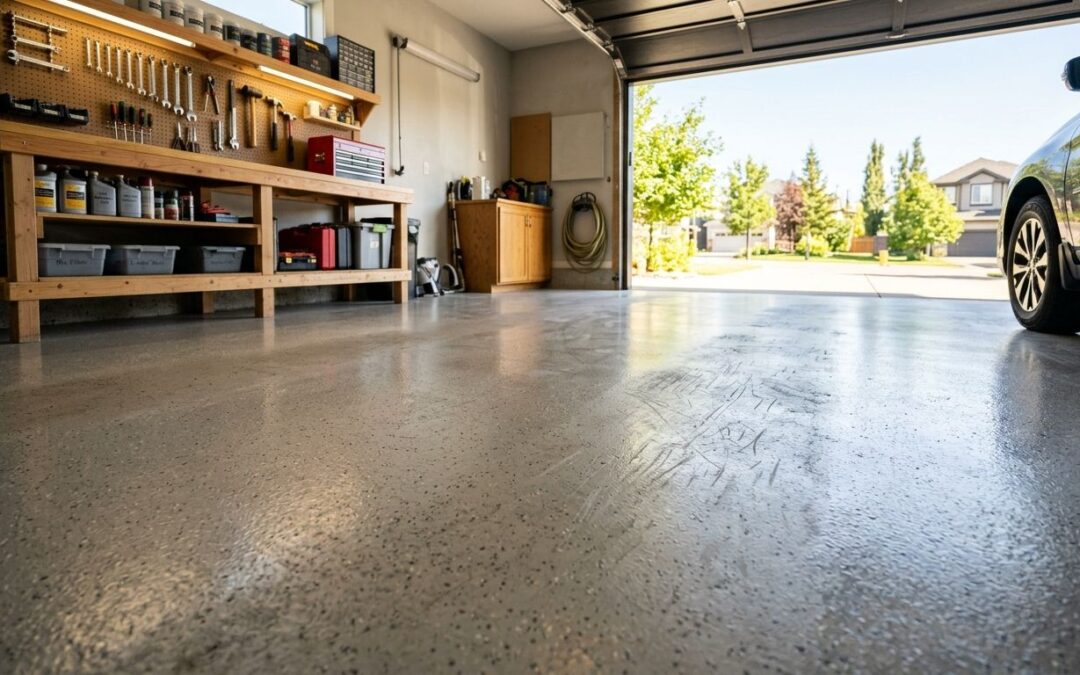
What do epoxy floors look like after 5 years of daily use? After half a decade, a well-installed epoxy floor typically shows subtle but visible signs of normal wear: a softening of gloss, fine micro-abrasions, and light scratches concentrated along high-traffic paths. These changes reflect routine exposure to foot traffic and minor impacts rather than a failure of the coating itself.
In both cities, ultraviolet rays might increase yellowing and chalking in sunny places like windows or skylight openings. The sun does that. It should be managed by cleaning the area with a pH-neutral cleaner and adding mats inside entrances to reduce grit abrasions.
Wear and tear vs warning signals: While normal wear and genuine warning signs are different, widespread peeling, bubbling, or delamination points to underlying issues—often poor surface preparation or moisture intrusion—rather than the passage of time alone. Knowing the difference helps property owners decide whether a simple recoat will restore the floor’s original look or if more substantial repairs are needed before minor wear becomes a larger problem.
Key Takeaways
- After five years of regular use, a well-installed epoxy floor typically shows subtle but expected signs of wear that reveal its age without compromising its integrity.
- Most five-year old epoxy floors in Edmonton can be viewed as testimonies to their building history.
- After several years of service, epoxy floors inevitably show signs of cosmetic aging even when the coating remains structurally sound.
- Even when a floor has been on the job for several years, it may still display indications of its age in terms of wear.
- Five years in, a well-installed epoxy floor shows normal signs of use rather than failure: a softer gloss, fine scratches along traffic paths, and subtle micro-abrasion where wheels and feet move most.
What Epoxy Floors Look Like After 5 Years
After five years of regular use, a well-installed epoxy floor typically shows subtle but expected signs of wear that reveal its age without compromising its integrity. The trending keyword what do epoxy floors look like after 5 years highlights this milestone as a practical checkpoint for property owners to assess their floor’s condition. In walked-on traffic lanes, you’ll notice a slight reduction in gloss and fine scratches that accumulate over time, while the rest of the surface remains firmly bonded and intact. These visual cues are normal aging patterns, not indicators of failure.
The Normal Signs of a Well-Aged Epoxy Floor
A five year old epoxy floor, in fine shape, shows a handful of changes expected from normal usage. In high traffic areas, there will be some dulling to the surface and the appearance of microscopic abrasions that catch light differently than other parts of the floor. These scratch lines should generally remain shallow and even over time. They are located in common paths traveled by foot and wheeled objects. Outside these locations, the floor can retain its smoothness, bond and visual uniformity. There should be no lifting away of the coating from the underlying concrete.
- Fine scratches and micro-abrasions in traffic lanes
- Slight gloss reduction in walked-on areas
- Intact bonding across the rest of the floor
The floor’s life isn’t over because these signs aren’t red flags. They’re simply the floor’s version of a long-forgotten love letter from the last five years, which says, ‘We’ve done our job now’. You can tell a problem when the marks of time spread unevenly or show up in areas that rarely get traffic.
Shine Retention and Color Stability Over Time
After about five years, the glossy finish on heavily traveled areas will have dulled due to micro-scratches, and the coating surface becomes less smooth over time. It’s not that the product was defective. It’s just what happens when an epoxy is subjected to continual abrasive action and UV radiation from the sun. The difference between them is obvious, though: If wear has been fairly uniform along the whole width of all the traffic lanes, then it indicates that the product is aging normally. Conversely, if there are scattered spots where the coat is dull or discolored, that could indicate a local problem either with poor adhesion or trapped water from a porous base.
After half a decade, however, color stability will make a difference. It turns out that high quality epoxy systems fare much better than the lesser types in terms of yellowing and chalking, especially when topped with UV-stabilized finishes. Consequently, there may be some subtler tonal variations where the lighting shines, but they still merge organically with what other parts of the floor are doing rather than suggesting there was something wrong with the materials at hand. As long as the entire surface maintains a uniform appearance despite those very small differences, then it’s clear we can have confidence the floor system has aged according to design.
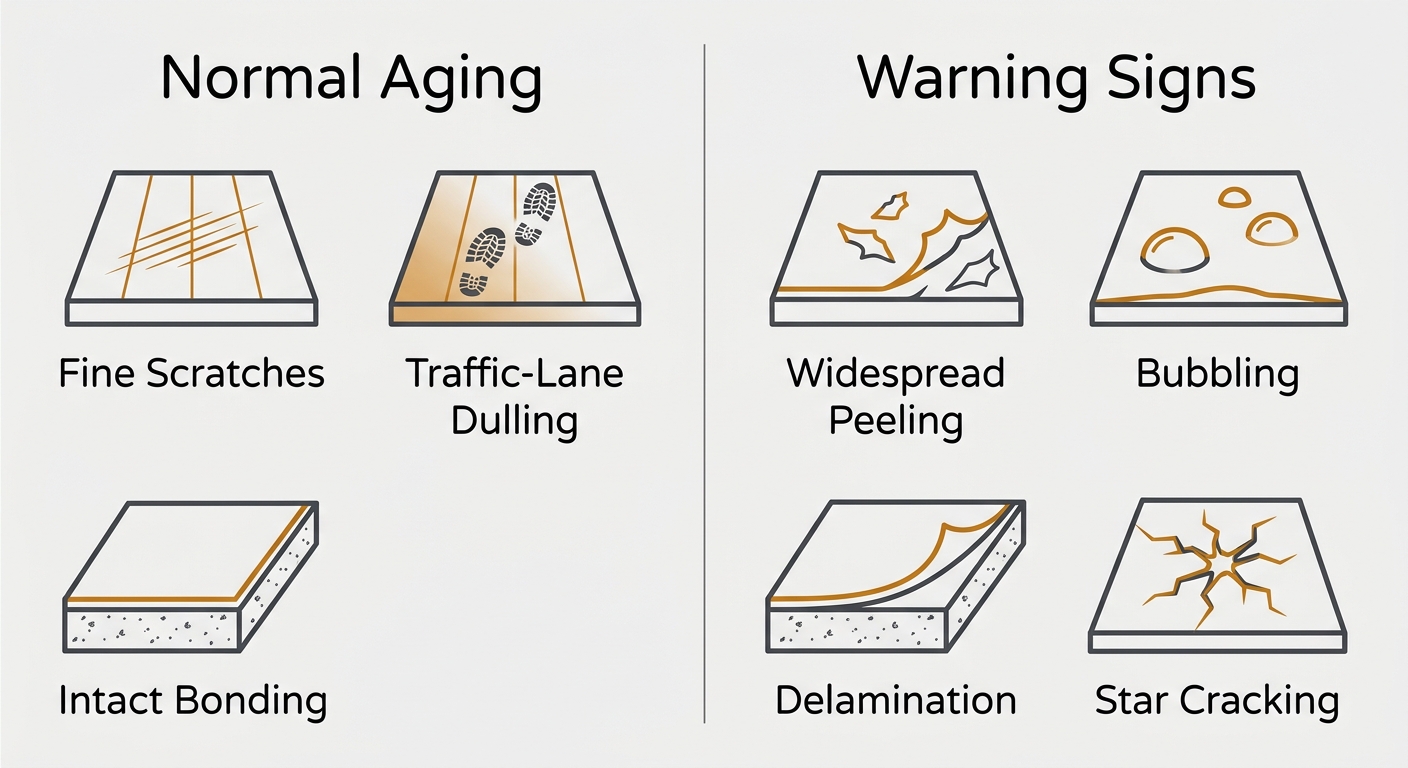
The usual wear marks tell us that the proper epoxy flooring installation will last for many years as it ages instead of failing right away.
Why Epoxy Floors Are Built to Last
Most five-year old epoxy floors in Edmonton can be viewed as testimonies to their building history. In homes across Edmonton and Kelowna, we often see gloss reduction, fine scratches, and micro-abrasion in high-traffic zones — these are normal signs of aging, not failure. Meanwhile, floors that show significant flaking, blistering, or delaminating indicate there was a problem with the installation or the substrate. It matters more as each condition is just the picture on what the floor looks like as it gets older while still maintaining that quality through time.
Epoxy Floor Lifespan in Homes and High-Traffic Spaces
Epoxy floors in homes’ garages, basements, and driveways suffer different amounts of stress based on where they’re placed. In a basement or any other living space, footsteps can gradually cause an epoxy floor to wear down until its surface becomes smoother over time. Garages see more tough tasks such as vehicle loads and liquid chemicals spilling on them, both of which can hurt the coating’s hardness as well as its resistance to solvent-based substances. Meanwhile, driveway areas take much harsher treatment since UV radiation and frequent hot/cold swings speed up yellowing and chalking of ordinary epoxy types. We won’t give specific estimates for lifespan due to all kinds of situations involved, but these environmental factors determine how long a floor retains its original look and function.
It also makes sense to properly maintain the coating to preserve its original form, which is possible through cleaning surfaces only with neutral products to avoid any chemical degradation that would cause the floor surface to soften. Using floor mats reduces the amount of dirt particles that could scratch up the surface. If moisture remains under the slab for too long without proper drainage, this can result in blistering, whitening and the resulting detachment of the coating. In such a case, timely corrective work should be carried out with spot repair and targeted recoats rather than replacing the entire floor.
What Separates a Floor That Ages Gracefully from One That Fails Early
It’s really the system’s build quality and how it was prepared that makes the biggest differences. Multi layer epoxy systems with a 100% solid coating will last much longer than the one coat system simply because stress is spread throughout the multiple layers and lessens any chance for chemicals to penetrate through. Mechanical surface preparation, either blasting or scarifying, creates a texture on the concrete which will make sure that when the epoxy is put down, there is actually a bond to the substrate. These factors directly influence how a floor’s gloss, color, and surface hold up over the years.
When they neglect necessary steps for proper installation and use thin coating, early failure may occur, causing peeling and cracks. So you must ask about how they prepare the ground and the intended coating build thickness before installation, because that helps you invest in a floor that ages well. With regards to the environment, if the floor will be exposed to plenty of sunlight, you might want to pick a UV-resistant coating rather than using ordinary epoxy that could get discolored over time due to excessive exposure to ultraviolet rays.
How Epoxy Floors Age: Gloss, Yellowing, and Fading
After several years of service, epoxy floors inevitably show signs of cosmetic aging even when the coating remains structurally sound. High-traffic areas begin to lose their luster, becoming duller because of accumulated tiny abrasion marks and fine scratches. When exposed to sunlight, epoxies can turn slightly yellow, a phenomenon sometimes known as “ambering,” or become chalky and discolored as ultraviolet radiation begins to attack the epoxy’s polymer chains. These changes are normal aging patterns, not installation failures, and they show how the nature of the resin and its surrounding environment interact over time.
Why Yellowing and Color Fading Happen
Both yellowing and chalking were caused by exposure to ultraviolet rays in sunlight. Normal epoxy paints lack true UV stability, so prolonged sun exposure causes the resin to oxidize and shift toward warmer tones – we call this ‘ambering’. Chalking, by contrast, happens when the surface resin breaks down into a fine, powdery residue that dulls the original color. It was only possible to get proper UV stability using aliphatic polyurethane topcoat which will then cover an epoxy primer. Again though it was the chemistry of the material more than the skills of the man painting it that would decide whether or not your color held or faded.
In addition, the hard rigidity of epoxies plays a part in their appearance over time as well. Though epoxy is exceptionally durable, hard, and resistant to chemicals, its low level of stretch makes it prone to cracking under thermal shock or substrate movement. Cracks mean damage on the inside, a fact that serves as another reminder that epoxy lacks flexibility despite being built to last.
Professional Installation vs DIY Kits at the Five-Year Point
Why do professionally installed floors and DIY kits look different after five years? The gap comes down to preparation and materials. A properly prepared substrate with thorough etching and profilometry ensures deep adhesion, while consistent film build across multiple coats resists peeling and maintains gloss longer. DIY kits, by contrast, often skip critical steps like vapor barrier installation or multi-layer priming, leaving the floor more vulnerable to moisture blisters and uneven wear.
| Factor | Professional Installation | DIY Kit |
|---|---|---|
| Surface preparation | Etching, profilometry, vapor barrier, multi-layer priming | Minimal surface prep, often limited to cleaning |
| Coating thickness / film build | Consistent, measured film build across multiple coats | Variable thickness, prone to thin spots |
| Long-term appearance | Retains gloss longer, resists yellowing and chalking | Higher risk of uneven wear, premature yellowing, and delamination |
The five-year appearance gap doesn’t have much to do with installation speed, but rather preparation quality and the chemistry of the coatings involved. A floor that has been properly prepared and then coated with a UV stable topcoat will usually be in much better condition after five years of exposure to the elements than would be the case for a self installed floor, even if both had received similar wear and tear from sunlight and foot traffic.
Keeping Your Epoxy Floor Looking Its Best
Even when a floor has been on the job for several years, it may still display indications of its age in terms of wear. Recognizing these signals will help to determine whether there is anything that needs addressing before any serious damage occurs. Regular maintenance can help ensure your epoxy surface stays both effective and good looking.
Spotting Premature Aging Before It Spreads
The specialists in floor maintenance have remarked that after five years, normal wear includes a gradual reduction in gloss, fine scratches concentrated in high-traffic zones, and subtle micro-abrasions. These changes are expected and do not compromise the floor’s integrity. However, certain patterns signal deeper problems:
- Widespread peeling or delamination
- Bubbling or blistering across multiple areas
- Circular blisters indicating trapped moisture or poor adhesion
- Star cracking radiating from impact points
Signs may indicate issues with the substrate, improper surface prep, or poor installation. If this occurs, bring in professionals before repairing and make sure the surface has been properly prepped. Proper surface preparation, including etching and profilometry, is critical to preventing future delamination and peeling. UV exposure is a primary cause of yellowing and chalking in epoxy coatings, which can make floors appear older than they are.
Maintenance Habits That Preserve Gloss and Color
Do routine maintenance work on the old epoxy flooring so your space looks good. Clean often with a broom to get rid of gritty matter. Use a damp mop with a pH-neutral cleaner made for epoxy floors to avoid chemical damage. Clean spills promptly—especially oils, solvents, or harsh chemicals—to prevent softening or discoloration of the coating.
In cases of minor damage like chips and scratches, spot repairs with epoxy patch compounds can restore appearance without needing to re-do the entire floor. If you have to repaint the floor, address any moisture issues with a vapor barrier before recoating, as this step is critical to prevent future blistering or whitening. If moisture is present in the concrete surface, it can be a significant risk factor that may lead to blistering or whitening, requiring a vapor barrier if identified. If moisture gets behind the surface, then this could cause blistering/whitening later on down the road. Once it comes time to paint again, multiple layer coat systems last much longer than just a single layer because they add more durability and provide better appearances. In addition, proper material selection, good installation quality and having professionals help to ensure that the floor lasts a while. Combining maintenance with having experts step in at the right times makes it easier to maintain your epoxy floors for many years.
Frequently Asked Questions
How does a professional epoxy installation hold up after 5 years compared to a DIY kit?
A professionally installed epoxy floor typically retains gloss longer and resists yellowing better than a DIY kit after five years. Professionals use thorough surface preparation, consistent multi-layer film builds, and UV-stable topcoats, while DIY kits often skip critical steps like vapor barriers and proper priming.
What visual changes should I expect in my epoxy floor after 5 years of regular use?
After five years, a well-installed epoxy floor usually shows fine scratches, micro-abrasions, and a slight gloss reduction in high-traffic areas. These changes are normal signs of wear and do not indicate failure if the coating remains bonded and intact elsewhere.
Does an epoxy floor lose its shine or gloss after 5 years?
Yes, an epoxy floor typically loses some gloss in heavily traveled areas after five years due to accumulated micro-scratches and surface wear. This dulling is a normal aging pattern and does not necessarily mean the floor is failing.
Can you tell if an epoxy floor is aging prematurely after 5 years?
Premature aging is indicated by widespread peeling, bubbling, delamination, or star cracking across the floor. These signs suggest issues with installation, surface preparation, or moisture problems rather than normal wear.
Will my epoxy floor show signs of yellowing or color fading after 5 years?
Epoxy floors exposed to sunlight may show yellowing or chalking after five years due to UV exposure. Using a UV-stable topcoat can reduce these effects, but some color shift is normal in areas with significant natural light.
Invest in a Floor That Still Looks Great in Five Years
Five years in, a well-installed epoxy floor shows normal signs of use rather than failure: a softer gloss, fine scratches along traffic paths, and subtle micro-abrasion where wheels and feet move most. These changes are part of the coating’s natural aging cycle and do not indicate systemic problems. If you’re wondering what epoxy floors look like after five years, the answer is a surface that still performs reliably when maintained properly.
The UV rays can create a yellow cast or a whitish haze over the sunlit parts of the deck, particularly when a UV stabilized finish was not included. This changes its appearance but isn’t a defect — it’s prevented by using the right system from day one. Widespread delamination, blisters, or peeling indicate problems with installation or the deck substrate. And installer quality and surface preparation matter as much as the epoxy itself.
Floors designed to last are made up of multiple layers combined with Ultra-brand 100% solid epoxies. These systems resist chemicals, heavy traffic, and daily wear. If small scratches come along, touch-ups could get them back in shape without requiring complete replacement. Floors are built for the future, and will still look great even several years later. If you want lasting quality, our team located in Edmonton and Kelowna would love to work with you. Contact us at (778) 594-3595 for pricing on a new custom floor plan.
Plan Your Epoxy Floor Today
You now know what a realistic five-year-old epoxy floor looks like: slight gloss reduction, micro-abrasion, and fine scratches in traffic zones — normal aging, not failure. You also know the warning signs that matter, such as widespread peeling, bubbling, or delamination, which point to installation or substrate problems rather than age. That distinction is exactly why installer quality and multi-layer build thickness determine how a floor holds up over the years. Whether you’re maintaining an existing floor or planning a new installation in Edmonton or Kelowna, having a professional assess your concrete is the smartest next step. Our team can review your space, answer your questions, and provide a custom quote with no obligation. Reach out through our quote request page to get the conversation started. A floor that still looks great in five years begins with the choices you make today.